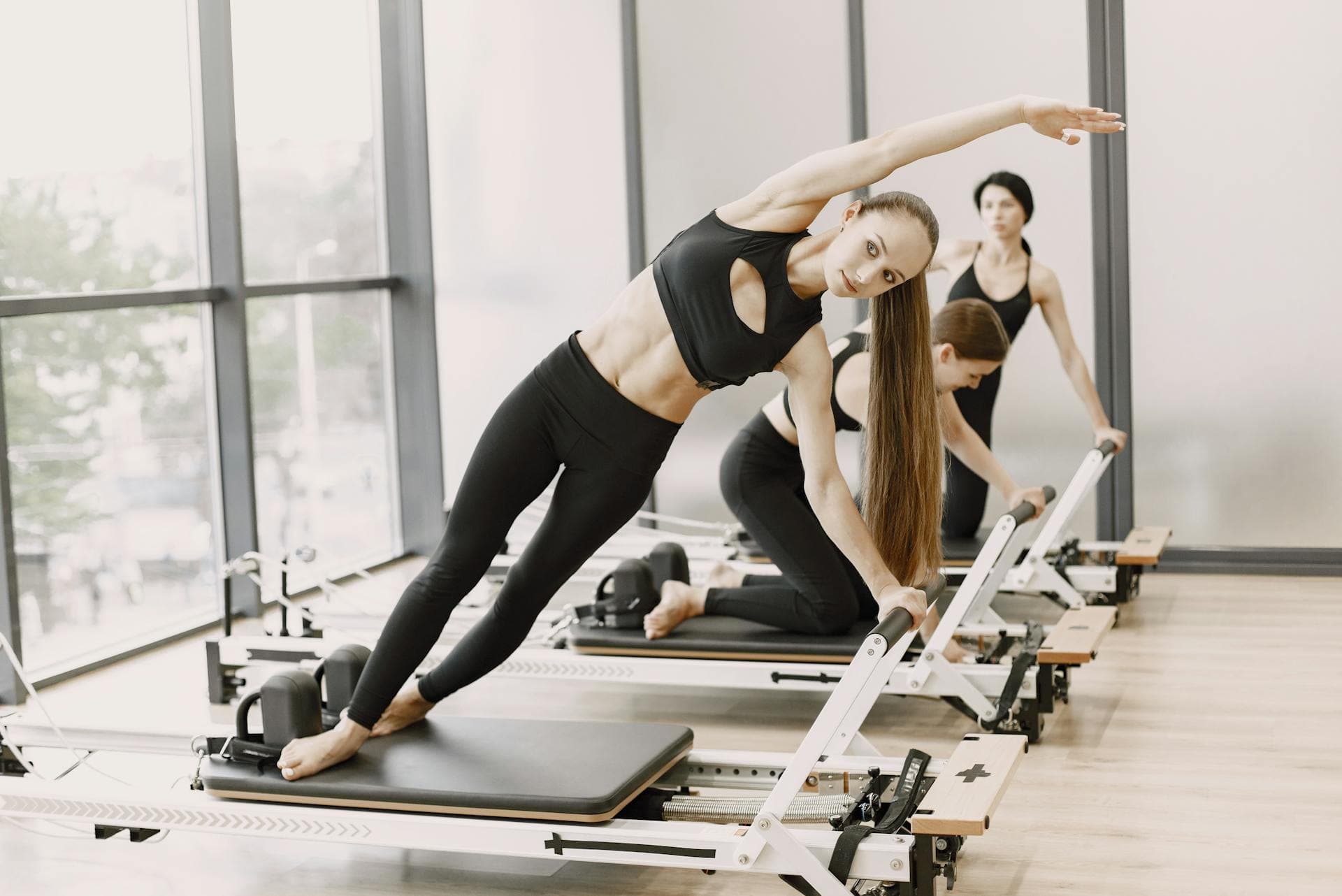
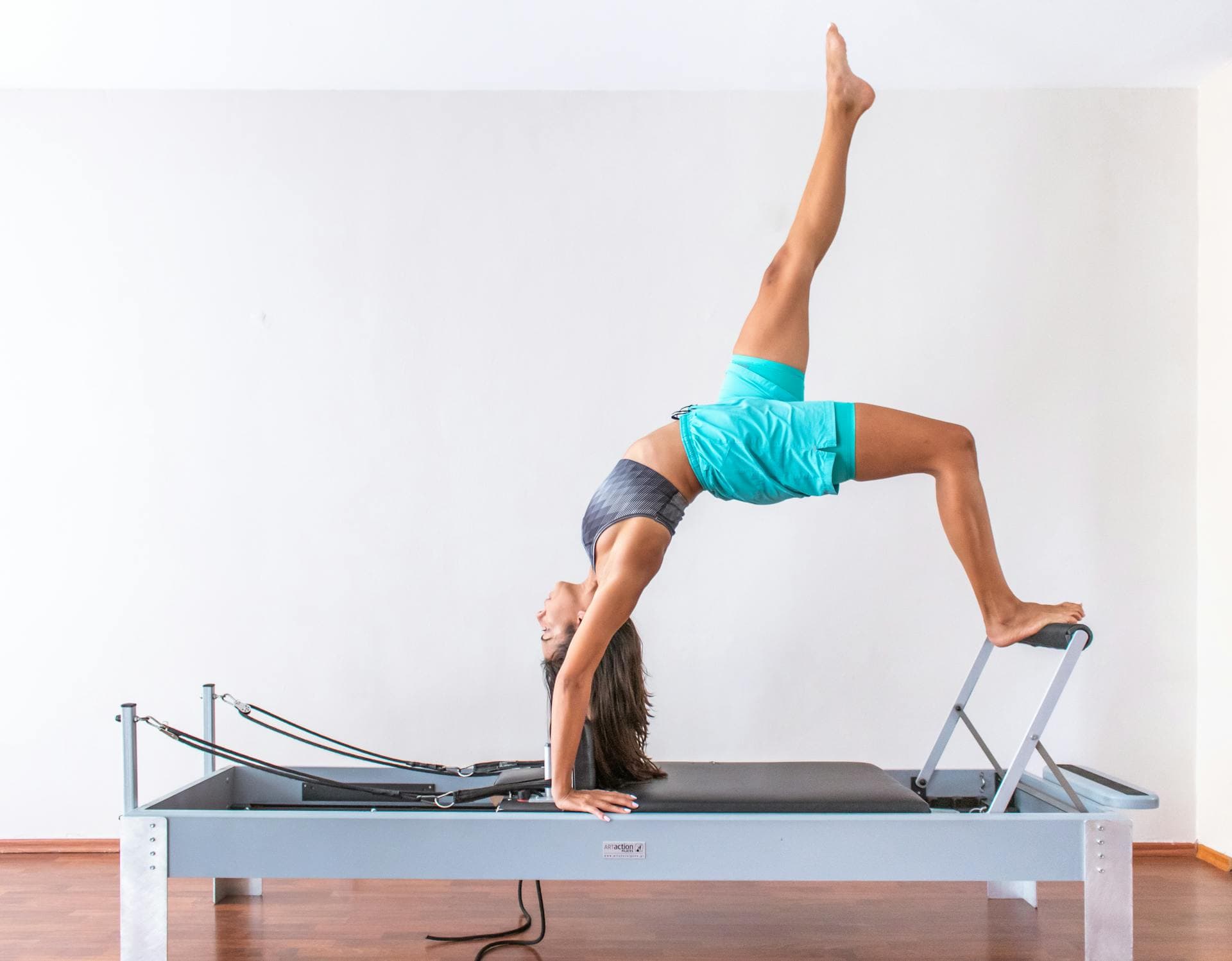
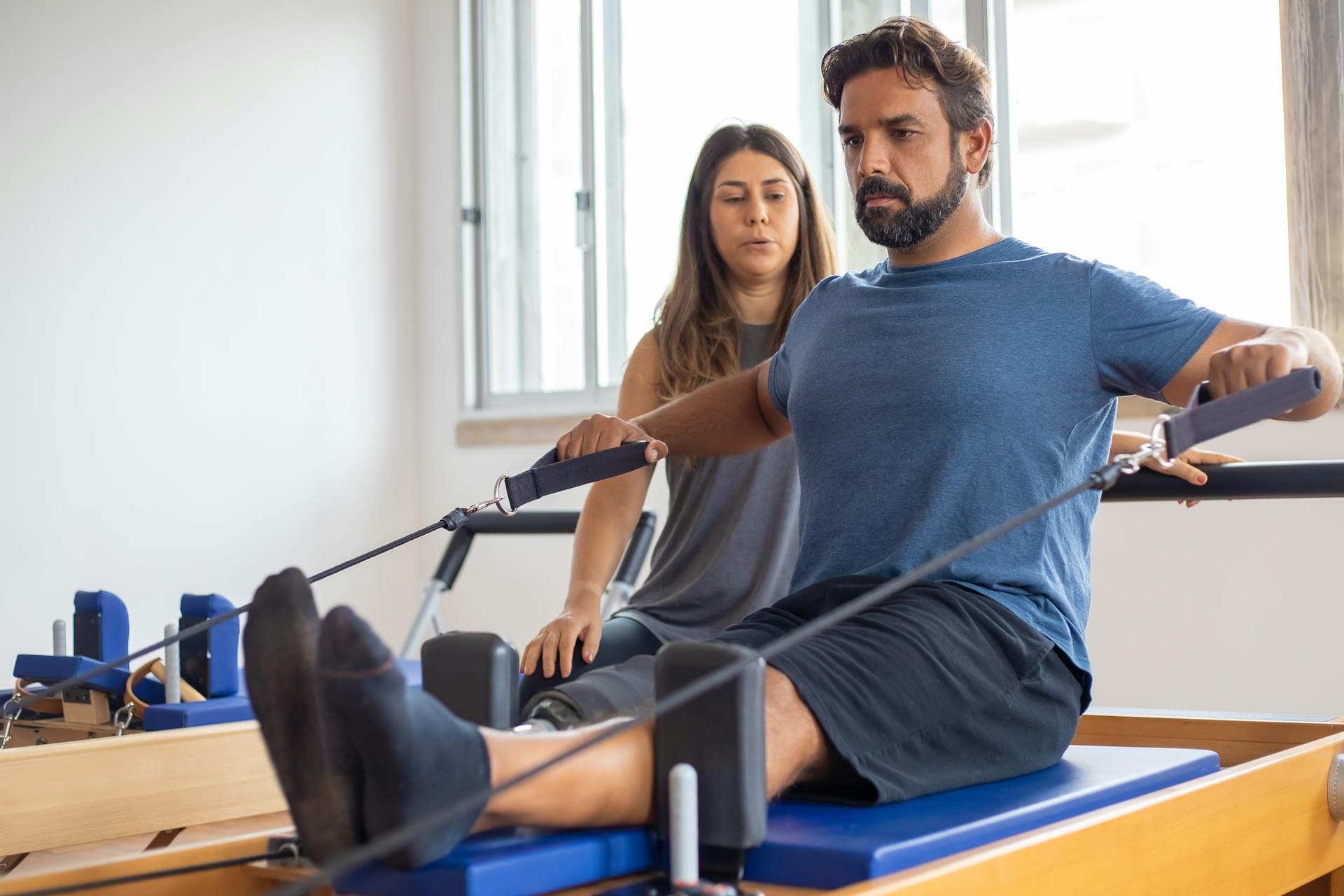
There's a version of the six principles you'll find on studio walls and in coffee-table Pilates books: Concentration. Control. Centering. Flow. Precision. Breathing. Listed cleanly, sometimes in calligraphy, they look like wellness affirmations. But in practice, on a Reformer carriage that's sliding away from you or a Wunda Chair pedal that won't stay still, they are anything but gentle suggestions. They are the operating instructions for a system that demands your entire attention.
A Framework Codified After the Founder
Joseph Pilates never actually wrote a tidy list of 'six principles.' The framework was codified after his death, largely through the work of his students — Romana Kryzanowska, Kathy Grant, Ron Fletcher, Eve Gentry and others — who distilled common threads from his teaching. What Pilates did write, in his 1945 book Return to Life Through Contrology, was remarkably clear about one idea: every movement must involve the whole person. Not just muscles. The mind, the breath, and the will to control each inch of motion. As Wells, Kolt and Bialocerkowski noted in their 2012 systematic review, the principles provide the theoretical framework that distinguishes Pilates from other exercise modalities. To understand where the principles came from, it helps to know what classical Pilates actually is.
Concentration: The Foundation
Concentration is the first principle because without it, nothing else is possible. In classical Pilates, concentration doesn't mean vaguely 'being present.' It means directing specific attention to specific muscles in a specific moment. When you perform the Hundred, you are simultaneously thinking about the scoop of the abdominals, the reach of the arms, the length of the neck, the stillness of the torso and the rhythm of the breath — all while pumping the arms one hundred times. This level of focus is trainable, and it improves with every session. Clients often report that the mental discipline they develop on the mat begins to surface in their daily lives — at their desks, behind the wheel, in conversations.
"The moment a client stops thinking about what they're doing is the moment they lose the exercise. I tell everyone: your body goes where your mind leads. If your mind is on your shopping list, your powerhouse just checked out too." — Katie Kollar
Control: Why He Called It 'Contrology'
Pilates named his entire method 'Contrology' for a reason. Control means no movement happens by momentum, by accident, or by gravity. Every phase of every exercise — the initiation, the middle range, the end range, and the return — is consciously directed. Consider the Roll Up: lying flat on the mat, arms overhead, you articulate the spine off the mat one vertebra at a time, curling forward until you reach your toes, then reverse the process on the way down. There's a moment, about two-thirds of the way down, where gravity wants to take over and drop you to the mat. Classical Pilates says no. You lower with the same vertebra-by-vertebra control on the descent as you had on the ascent. That moment of resistance is where the real work happens.
Centering: Everything Begins Here
Centering refers to the Powerhouse — but more broadly, it's an organising principle for all movement. In the classical method, every exercise originates from the centre of the body. Your arms don't just reach; they reach from a stabilised ribcage and supported shoulder girdle that are anchored to the Powerhouse. Your legs don't just extend; they extend from deep hip flexors that are connected to the pelvic bowl and lumbar spine. When centering is correct, the extremities move with economy and the spine stays long. When it's missing, you see compensations everywhere: arching lower backs, shrugging shoulders, gripping hip flexors. Muscolino and Cipriani's 2004 analysis in the Journal of Bodywork and Movement Therapies highlighted that this integrated concept of the Powerhouse as the origin of all movement is the defining biomechanical principle of the method. A well-trained classical teacher spots deviations from centering instantly — it's one of the reasons our group classes are limited to small numbers.
Flow: No Dead Spots
Flow is often the most misunderstood principle. It doesn't mean moving quickly or doing exercises in a smooth, dance-like manner. It means there are no dead spots. In a classical mat sequence, the transition between exercises is itself an exercise. You don't finish the Roll Up, lie down, take a breath, and then start the next movement. You finish the Roll Up and the way you lower yourself becomes the preparation for the Single Leg Circle. This connective tissue between exercises is what defines a Pilates session as a flowing sequence rather than a collection of isolated movements. It's also what makes Pilates cardio-respiratory work in a way most people don't expect — your heart rate rises not from speed but from the absence of rest.
"When I watch a client transition smoothly from one exercise to the next without me prompting, I know the principles have started to take hold. That flow isn't something I can teach directly — it emerges when concentration, control and centering are already working." — Katie Kollar
Precision: Every Angle Matters
Precision is the principle that separates a good Pilates session from a transformative one. Joseph Pilates reportedly said, 'A few well-designed movements, properly performed in a balanced sequence, are worth hours of sloppy calisthenics.' Precision means the angle of the leg matters. The position of the foot matters. Whether the knee tracks over the second toe or drifts inward — it matters. In the Elephant on the Reformer, for instance, the difference between a rounded spine with a deep scoop and a flat back with engaged hip flexors is the difference between strengthening the deep abdominal wall and merely pushing a heavy carriage back and forth. Precision is not perfectionism; it's the understanding that correct movement patterns, repeated consistently, reshape the body. This is why our levels system exists — it ensures you've internalised the precision of one stage before adding complexity.
Breathing: Simple and Complex
Breathing is both the simplest and the most complex of the principles. Simple because everyone breathes. Complex because almost no one breathes well. Classical Pilates uses lateral thoracic breathing: inhaling into the sides and back of the ribcage rather than into the belly. This pattern serves a specific mechanical purpose — it allows you to maintain deep abdominal engagement (the powerhouse 'scoop') while still taking full, oxygenating breaths. The exhale is typically tied to the effort phase of an exercise: you exhale on the curl in the Roll Up, on the extension in the Swan, on the press in the Footwork. This coupling of breath and movement creates an internal rhythm that coordinates the entire system.
The Principles in Concert
What these six principles share is that none of them works in isolation. Concentration without control is just watching yourself struggle. Flow without precision is sloppy. Centering without breath is tension. The magic happens when all six principles operate simultaneously — and the remarkable thing is that this isn't as overwhelming as it sounds. In the early sessions, you focus consciously on one or two. By month three, they begin to layer. By year one, they become automatic. This is the progression Joseph Pilates designed: from conscious effort to integrated movement that feels effortless.
There's a moment in many clients' journeys — usually somewhere around the fourth or fifth month — when something shifts. A movement that felt complicated suddenly feels simple. Not because it got easier, but because the principles have become embodied. The concentration is there without strain. The breath falls into rhythm without counting. The powerhouse engages before you consciously think about it. This is what Pilates called 'the natural rhythm and coordination associated with all mental and physical activities.' When it arrives, you understand that the six principles were never just instructions for exercise. They were instructions for moving through life.
A Practice, Not a Checklist
It's worth noting what the principles are not: they are not goals to achieve and check off. Even teachers with decades of experience continue refining their concentration, deepening their centering, and discovering new subtleties in the relationship between breath and movement. The principles are a practice — which means they grow with you, whether you've been doing Pilates for three months or thirty years.
Ultimately, the six principles are what make classical Pilates a discipline rather than a workout. They are the reason a one-hour session on the mat can leave you more mentally clear than a run, more physically integrated than a yoga class, and more aware of your body than any amount of weightlifting. They don't promise quick results. They promise real ones. View our timetable to start experiencing the principles in practice, or book a private session to work on them one-to-one.